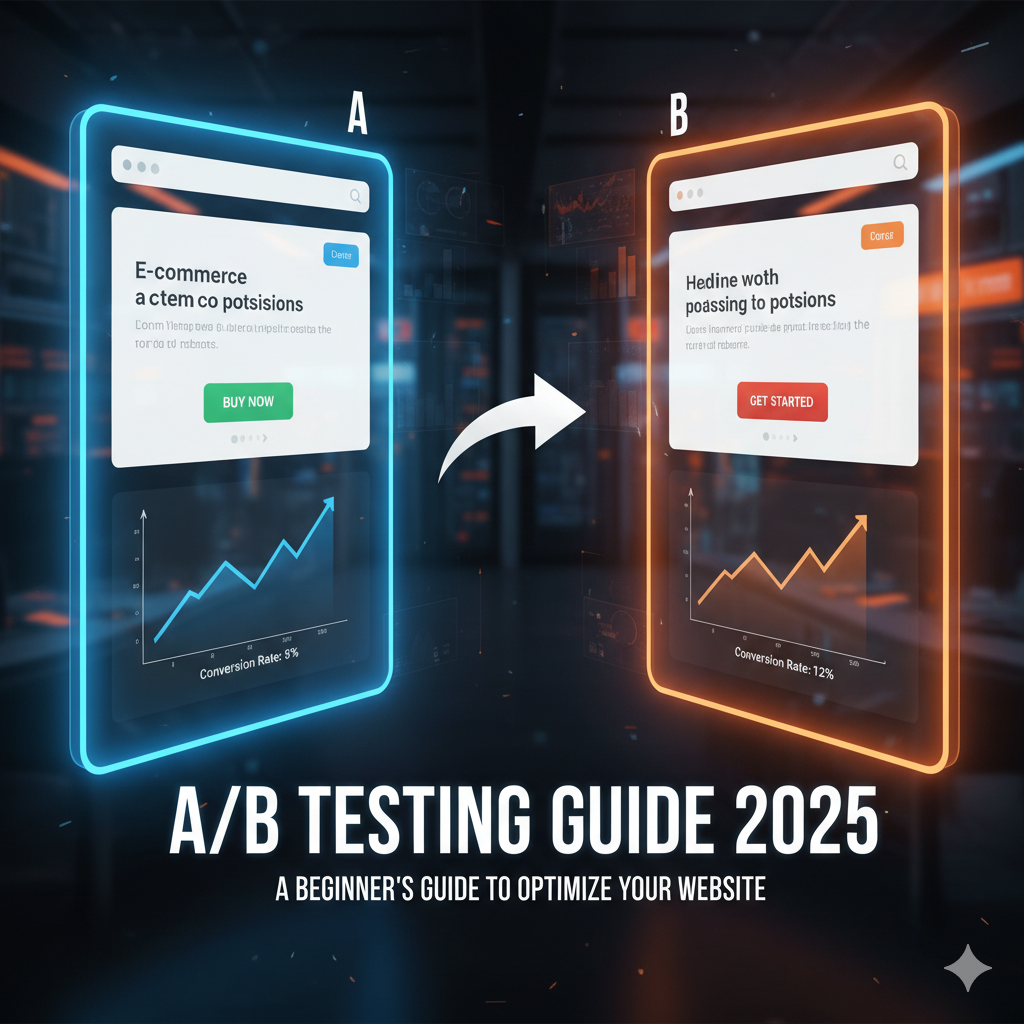
A/B Testing Guide 2025: A Beginner’s Guide to Optimize Your Website
Posted on September 20, 2025
Introduction: Why A/B Testing is Essential in 2025
In the fast-paced digital world, making decisions based on assumptions can cost you conversions and revenue. A/B testing, also called split testing, allows businesses to compare two versions of a webpage, app, or email to identify which performs better.
According to Invesp, companies that regularly run A/B tests see an average 49% increase in conversion rates. Tools like DirectExperiment.com empower marketers, product owners, and engineers to run experiments effortlessly and make data-driven decisions.
What is A/B Testing?
A/B testing is the process of showing two variants (A and B) to users to determine which version achieves a specific goal more effectively.
Control: The original version
Variant: The modified version with a change
Goal: Measurable outcome, such as increased clicks or signups
Example: Testing a green “Sign Up” button versus a blue one to see which gets more clicks.
Fact: 70% of online companies run A/B tests on landing pages, pricing pages, or email campaigns.
Why A/B Testing Matters for Your Website
Increases conversion rates and revenue.
Improves user experience with data-backed changes.
Helps optimize content and CTAs for better engagement.
Stat: Companies that consistently run A/B tests grow revenue twice as fast as competitors that don’t.
CTA: Start running your first test today with DirectExperiment.com and optimize your website effortlessly.
Key Concepts Every Beginner Should Know
1. Hypothesis
Formulate a testable assumption:
“Changing the headline on the pricing page will increase signups by 15%.”
2. Sample Size
Too small a sample can produce misleading results. Ensure you have enough traffic for statistical significance.
3. Metrics & KPIs
Focus on measurable metrics like:
Click-through rate (CTR)
Conversion rate
Revenue per visitor
Bounce rate
4. Confidence Level
Typically, 95% confidence is used to determine if a variant is truly better than the control.
Types of A/B Tests in 2025
Landing Page Optimization: Headlines, CTAs, images, form fields
Email Campaigns: Subject lines, copy, personalization
App Features: Onboarding flows, button placements, notifications
Pricing Pages: Plan layouts, offer copy, discount display
Tip: Change only one variable at a time for accurate results.
Step-by-Step Guide to Running Your First A/B Test
Select a page or feature to optimize.
Define your goal (e.g., increase signups by 10%).
Create a variant with the change.
Split traffic randomly between control and variant.
Measure performance until results are statistically significant.
Implement the winning version or iterate further.
DirectExperiment Advantage:
DirectExperiment.com automates traffic split, tracks metrics, and highlights winning variants without coding knowledge.
Best Practices for 2025
Run tests long enough to reach significance.
Focus on high-impact pages first.
Always document your tests and learn from past results.
Use AI-powered insights for faster analysis.
Stat: HubSpot reports that consistent A/B testing can boost lead generation by up to 30%.
Common Mistakes to Avoid
Testing too many variables simultaneously
Ignoring sample size or test duration
Running tests without clear goals
Failing to track results
Tip: DirectExperiment.com helps avoid these mistakes by calculating sample sizes, tracking KPIs, and providing actionable insights.
Advanced Tips for Digital Marketers & Product Owners
User Segmentation: Personalize variants for different audience segments.
Multi-armed Bandit Testing: Test multiple variants at once for adaptive traffic allocation.
Cross-platform Experimentation: Test website, email, and app experiences together.
Analytics Integration: Combine with tools like Google Analytics or Mixpanel for deeper insights.
Conclusion: Start Your Experiment Today
A/B testing is no longer optional—it’s essential for any data-driven business in 2025. Businesses that consistently run experiments see higher conversions, better engagement, and increased revenue.
Start your first A/B test today with DirectExperiment.com and optimize your website like a pro.